
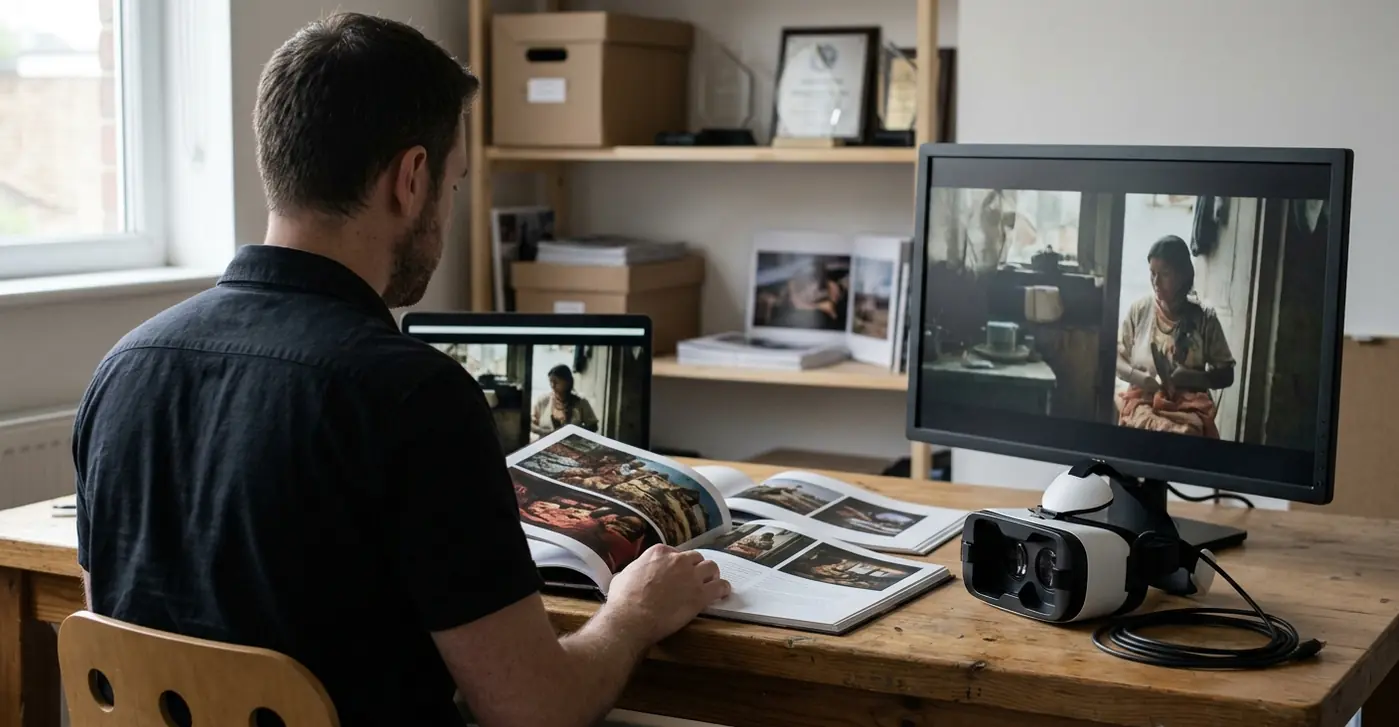
The Stakes of Transmedia Fragmentation
If you fail to build a unified narrative architecture across mediums, you risk losing your audience in the friction-filled gaps between platforms. An immersive story quickly turns into a disjointed mess—a risk that multiplies with every new platform added. Taking a linear investigative documentary and expanding it into a multi-platform ecosystem requires strict discipline to avoid diluting journalistic integrity. The technical and creative hurdles of managing three distinct mediums simultaneously demand a rigorous structural approach.
In the autumn of 2023, initial planning executed the development of a 6-DOF VR environment, 15-second vertical video hooks, and a 32-page risograph printed zine. The production unit initially considered launching all platforms simultaneously. They discarded this approach to prevent audience cognitive overload, opting instead for a staggered release architecture.
Warning: Failing to provide a clear onboarding ramp from a passive social video to an active VR environment, resulting in users abandoning the experience at the headset setup phase.
Analyzing the Core Narrative Architecture
During a two-week narrative mapping sprint in early November 2023, the editorial board categorized roughly 400 pieces of source material into spatial, tactile, and temporal buckets. They mapped the investigative timeline, deliberately assigning spatial evidence to the virtual reality environment and urgent, breaking updates to social media feeds.
Social media served as the delivery mechanism for urgent, bite-sized hooks. Virtual reality provided spatial, empathetic immersion into the investigation's environments. Print zines offered deep-dive, tactile evidence review. This distribution introduces the concept of narrative dependency. Each piece must function as a standalone experience while rewarding audiences who consume the entire ecosystem. Frameworks developed by research groups like the MIT Open Documentary Lab emphasize that cross-platform storytelling relies on these distinct functional assignments rather than simple content replication.
Pro Tip: The density of evidence presented in the print zine must scale inversely with the complexity of the VR environment to prevent cognitive fatigue.
Production Workflows for Cross-Platform Assets
Traditional documentary shoots capture linear footage and hand it off to post-production. Transmedia demands a unified production pipeline that captures assets for all three mediums concurrently to optimize budget and time. During the primary shoot window spanning January and February 2024, the production unit established a concurrent capture protocol.
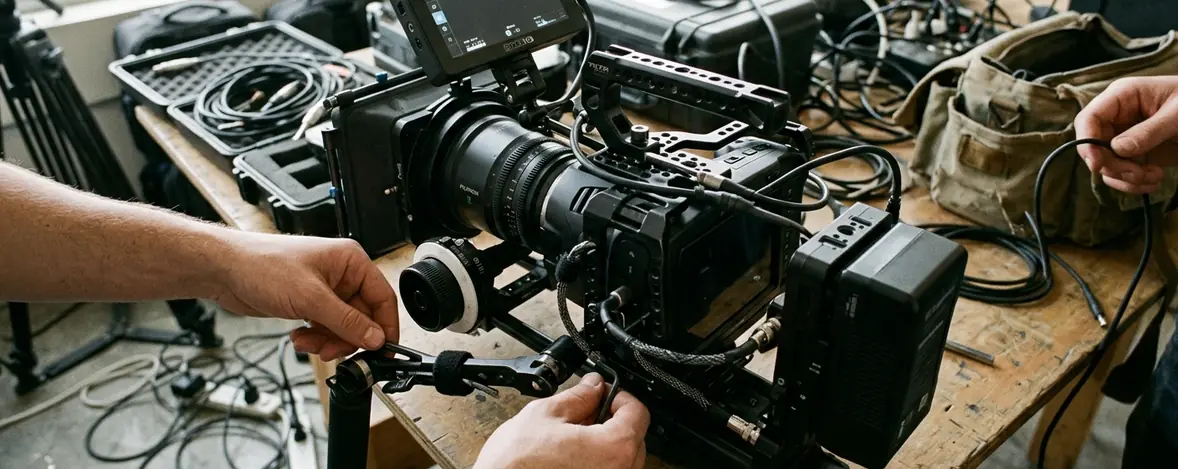
This protocol required the simultaneous deployment of a 6-lens 360-degree camera array alongside standard 4K documentary rigs. One catch: concurrent capturing demands rigid pre-production blocking, as the 360-degree camera's omnidirectional field of view severely restricts where traditional lighting stands and crew members can be positioned on set.
Technical hand-offs require precision across distinct disciplines:
- The video editorial team processes the 4K footage for social distribution.
- Unity developers ingest the spatial data to build the interactive VR environments.
- Print layout designers receive high-resolution stills and textual evidence for the physical zine.
Audience Migration Strategies
Moving users between platforms introduces high friction, particularly when transitioning from a mobile social feed to a VR headset. To bridge the physical-to-digital gap, marketing and design teams engineered a solution that bypassed manual URL entry entirely.
In March 2024, designers executed a physical-to-digital bridge design by integrating a dozen distinct high-contrast AR markers within the physical zine. These augmented reality triggers embedded directly into the print layout allowed readers to scan a page and instantly launch digital assets.
Cross-Platform Asset Matrix| Medium | Asset Type | Narrative Function |
|---|---|---|
| Social Video | 15-second vertical clips | Top-of-funnel acquisition and urgent hooks |
| Print Zine | 32-page risograph document | Tactile evidence review and deep-dive context |
The rollout pacing followed a strict funnel. Social media acted as the top-of-funnel acquisition tool, driving users to request the physical zine. Receiving the physical document then opened up the premium VR experience, creating a deliberate, step-by-step migration path.
Measuring Engagement Across Mediums
Vanity metrics offer little value when evaluating a multi-platform documentary. Analysts shifted focus from raw view counts to cross-platform completion metrics. The framework evaluated success by tracking how many physical zine recipients successfully activated the virtual reality headset experience.
During a measurement window of about six weeks across April and May 2024, the team tracked the activation of unique alphanumeric codes printed on the inside cover of the zines. The qualitative results highlighted audience retention and depth of engagement. The feedback loop demonstrated that the tactile nature of the zine increased trust and emotional investment in the VR documentary.
Key Takeaway: Where the analytics team tracked cross-platform completion metrics, the finding revealed that physical touchpoints significantly increase the likelihood of users completing complex digital onboarding steps.
Your Next Step in Transmedia Design
The strategy dictates isolating a single narrative thread before committing to full-scale multi-platform production, ensuring the core story translates effectively. Audit your current or upcoming project assets today to identify one specific narrative thread. Extract one character backstory or environmental asset—something self-contained but vital to the broader investigation. Dedicate a 72-hour prototyping window for secondary medium testing. Build a functional prototype of that single thread in a new format to validate the technical pipeline and narrative fit before scaling the entire production.






Responses
Be the first to comment.
Write a Comment