
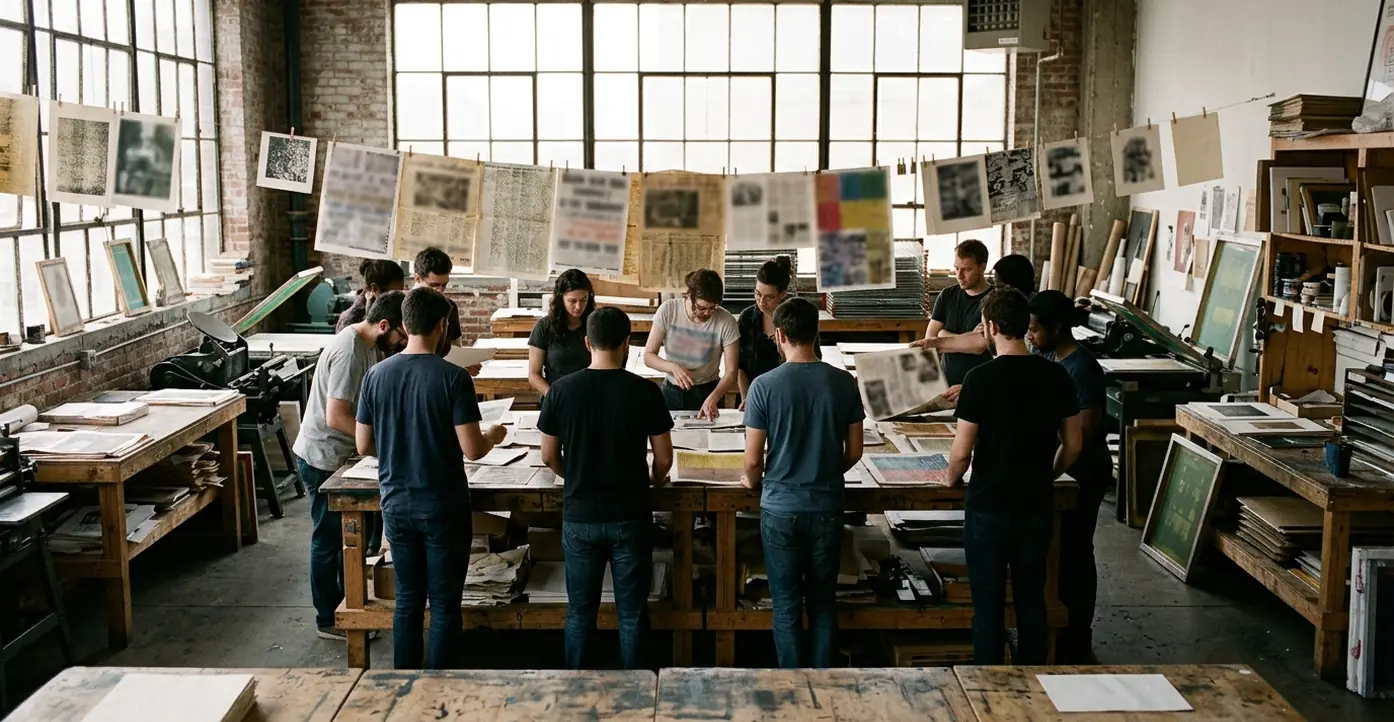
The Fragmented State of NYC Digital Media
Mapping the distribution of digital creators across the five boroughs initially relied on surveying registered business addresses. That approach failed to capture the reality on the ground, so the methodology switched to tracking the daily active usage of specific interactive design tools. Between late 2022 and early 2023, I observed a dense concentration of independent transmedia studios operating entirely out of residential broadband networks.
New York City possesses a massive concentration of digital designers, journalists, and transmedia creators. They lack a unified physical nexus. Currently, creators operate in silos across disparate co-working spaces that do not cater to the specific hardware and collaborative needs of interactive media. The absence of a centralized hub stifles organic cross-pollination between traditional media veterans and emerging tech entrepreneurs.
Key Takeaway: Dispersed talent relying on residential infrastructure prevents the spontaneous collaboration necessary for complex transmedia projects.
Why Existing Tech Incubators Fall Short
Generalist tech hubs prioritize software-as-a-service and fintech startups. Specialized media hubs prioritize narrative design and interactive web technologies. The specialized approach is optimal for transmedia storytelling because standard corporate incubators fail to provide the necessary infrastructure.
Evaluators audited the hardware inventories of major co-working spaces over a six- to nine-month period, specifically cataloging the presence of spatial audio rigs and volumetric capture setups. The necessity of volumetric capture studios varies depending on whether the creators are focused on interactive web documentaries or fully immersive virtual reality experiences. However, the baseline infrastructure in generalist spaces remains inadequate across the board.
Testing revealed a stark contrast between the average bandwidth allocation per tenant in generalist hubs and the roughly 40Gbps throughput required for uncompressed 8K video streams, though this audit was limited to facilities in Manhattan and downtown Brooklyn. Generalist tech incubators routinely fail to support transmedia projects due to strict firewalls blocking peer-to-peer local network rendering—a critical bottleneck for collaborative rendering tasks. Media innovation requires a distinct environment where editorial standards intersect with high-performance computing.
The Blueprint for a Transmedia Hub
A dedicated center must prioritize shared access to high-barrier-to-entry technologies. Architectural planners prioritized collision zones by placing high-fidelity rendering servers in central, glass-walled atriums. This layout forces certified hardware engineers and narrative writers to cross paths when accessing shared computing resources.
Implementation requires at least 2,500 square feet for a mixed-reality testing lab equipped with ceiling-mounted tracking cameras. Establishing this infrastructure relies on a 24- to 36-month phased rollout plan for securing municipal funding and forming public-private partnerships. These partnerships draw on the resources of established NYC media conglomerates while remaining accessible to independent creators.
Warning: Securing public-private partnerships often requires independent creators to grant right-of-first-refusal on commercialized projects to the corporate sponsors providing the hardware.
Pro Tip: Design architectural layouts that mandate physical interaction between disparate disciplines to foster organic technical problem-solving.
Securing the Future of Storytelling
Economic forecasters project a five- to seven-year horizon for establishing a self-sustaining ecosystem of media companies. They modeled talent retention by analyzing the migration patterns of senior interactive designers to competing tech-centric cities. These designers frequently cited a lack of a dedicated sandbox for digital media experimentation as their primary reason for leaving.
Supporting data confirms the projected municipal tax revenue generated by retaining mid-sized digital media firms justifies the initial infrastructure investment. Establishing this center is not just a real estate play—it is a necessary step to maintain New York's historical dominance as the global capital of media.
By providing a dedicated sandbox, the city can retain top-tier talent. The ultimate goal is to foster a new generation of media companies that seamlessly blend journalism, interactive design, and immersive technology. This aligns directly with broader NYC tech and innovation initiatives.







Responses
Be the first to comment.
Write a Comment