
When a Municipal RFP Made Multi-Platform Access Non-Negotiable
Compliance with New York City Local Law 12 of 2023 and the W3C's WCAG 2.1 time-based media guidelines at Level AA sets a hard technical floor for any vendor bidding on municipal digital media contracts. Specifically, Success Criteria 1.2.2 (Captions Prerecorded) and 1.2.5 (Audio Description Prerecorded) apply to every public-facing asset, from flagship web experiences down to ephemeral social cutdowns.
When a municipal agency issued an RFP in late 2023, an executive producer and lead creative technologist at a Hudson Yards digital studio audited their existing vendor pipeline against those exact mandates. Their standard startup ecosystem workflow treated captions and transcripts as post-production patches applied after picture lock. That approach collapsed immediately under the RFP rules, which required fully accessible staging prototypes during the midterm contract review. Furthermore, the municipal review window gave the studio just 21 to 28 days to submit a working interactive vertical slice complete with synchronized secondary audio tracks and keyboard-navigable transcripts.
The scope of deliverables at risk spanned a complete transmedia storytelling campaign. The pitch covered 18 short-form 9:16 social cutdowns, 4 interactive branching web episodes, and 6 sponsor-facing microsite assets. Delivering unified accessibility across all 28 pieces meant the studio could no longer treat text tracks and audio descriptions as downstream vendor handoffs.
Why Post-Production Captioning Failed Interactive Episodes and Social Clips
Across the studio's legacy 1080x1920 vertical videos, burned-in open captions occupied the bottom 250 pixels of the frame. That placement collided directly with native social platform scrub bars, interactive poll stickers, and clickable sponsor callout overlays. Viewers trying to tap a branching prompt or inspect a sponsor tag hit caption text instead, while the platform UI obscured the subtitles themselves.
The friction deepened inside the desktop and mobile web builds. During a pre-bid stress test on a past commercial campaign, the studio's engineering lead and QA specialist mapped how screen readers interacted with their custom HTML5 branching video player. Every narrative choice node broke the browser focus state. Non-sighted users navigating the branching transmedia narrative hit dead ends without an accessible DOM path, while the interactive web episodes lacked synchronized audio description tracks to explain visual choices appearing on screen.
Client review cycles compounded these technical failures. Whenever agency stakeholders requested dialogue trims during the final 3 to 5 days before delivery, the post-production team had to manually re-time three separate SRT files per episode across multiple aspect ratios and re-record synthetic or voice-actor audio description tracks from scratch. Deferring accessibility until picture lock turned minor editorial tweaks into expensive multi-day rendering bottlenecks.
Engineering Transcript-Linked Scenes and Audio Description from the Script Phase
The studio briefly evaluated an automated post-production AI dubbing and caption-alignment plugin to patch their existing workflow, but discarded it after sandbox tests showed it stripped out custom JSON metadata triggers needed for the interactive web episodes. Instead, the team rebuilt the production pipeline around a unified, script-stage WebVTT architecture that began before a single frame was shot.
Two-Column Shooting Scripts with Built-In Breathing Room
Writers overhauled their pre-production documents into formatted two-column shooting scripts. They wrote audio description pauses and visual cues directly alongside the primary dialogue, enforcing mandatory silent visual breathing room of about 2.5 to 4 seconds between dialogue blocks. Recording these deliberate pauses on set accommodated natural-voiced audio description tracks in the mix without resorting to jarring video freeze-frames during post-production.
Binding WebVTT Cues to Interactive DOM States
On the web development side, frontend developers eliminated detached transcript files. They bound each WebVTT cue ID directly to the interactive video player's state machine via the HTML5 TextTrack API. Because the interactive video DOM elements and WebVTT timecodes shared a single source of truth, clicking any line in the scrolling side-panel transcript jumped both the video playhead and the active DOM branching state within 150 to 300 milliseconds.
{
  "cueId": "scene_04_branch_a",
  "startTime": 42.500,
  "endTime": 46.000,
  "domState": "choice_overlay_active",
  "audioDescTrack": "ad_scene_04_pause.mp3"
}
Safe-Zone Overlays for Multi-Format Social Deliverables
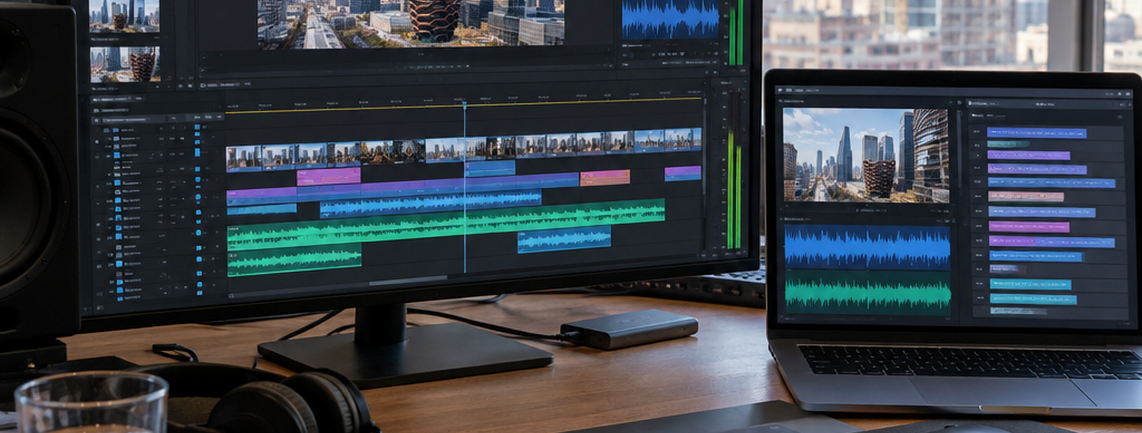
To prevent UI clashes on mobile feeds, motion designers built locked 1080x1920 and 1920x1080 safe-zone templates directly inside their editing software. These guides reserved a dedicated 180-pixel middle-lower band exclusively for dynamic closed-caption rendering. Top sponsor bugs and bottom interactive hotspots remained completely unobstructed across every export.
Overhauling Client Sign-Offs and Measuring Accessible Engagement
Technical architecture alone could not stop late-stage editorial notes from breaking synchronized DOM triggers. To protect the pipeline, the account director rewrote the municipal and sponsor statement of work. Under the new protocol, transcript lock, caption positioning, and audio-description narration scripts required formal stakeholder sign-off at the rough-cut milestone alongside the picture edit, rather than after color grading.
Moving accessibility sign-off to the rough-cut phase compressed final multi-aspect-ratio mastering and QA verification from 9–12 business days down to 2–3 business days. Once the rough cut locked, the time-coded metadata stayed intact through final finishing.
Pacing Trade-Offs in Pre-Production
Structuring scripts around mandatory 2.5-to-4-second silent intervals for audio description lowers the maximum spoken dialogue density to roughly 110 to 125 words per minute, which forces creative directors to cut rapid-fire conversational banter during pre-production.
Treating accessibility as core interactive design also unlocked deeper audience analytics for commercial and municipal stakeholders. The engineering team wired custom telemetry into the web player to log:
cuechangeevents tied to chapter navigation and branching choicesaria-liveregion updates triggered by keyboard and screen-reader users- Interactive transcript text-search queries inside the side-panel drawer
- Secondary audio-track toggle events and sound-off completion rates
Rather than handing sponsors basic view counts, the studio delivered verifiable engagement metrics demonstrating how sound-off commuters and screen-reader audiences navigated the campaign.
Why Media Teams Should Mandate Script-Stage Access Before the Next Pitch
Following the municipal contract win and initial rollout in early 2024, the Hudson Yards studio applied this architecture across its entire slate. Standardizing the JSON-to-WebVTT script template across subsequent 2024 interactive campaigns eliminated third-party post-house rush fees and prevented re-edit bottlenecks across 16:9, 1:1, and 9:16 deliverable packages. Onboarding freelance scriptwriters and motion editors onto the two-column pause-ready script template and safe-zone overlays took 4 to 6 hours of internal studio workshops before principal photography began.
Digital media studios and production teams should permanently kill the standalone "post-production captioning" budget line item. Waiting until picture lock to bolt on SRT files and secondary audio tracks breaks interactive web development and wastes days of finishing time. Make time-coded transcripts, safe-zone templates, and audio-description scripts the foundational project file during creative development on every commercial and municipal shoot.













Responses
Be the first to comment.
Write a Comment